Film Catalogisch FILM HISTORY. PRESERVED.
Archive-style visual inspired by The Killing Fields

CAMBODIA / WAR JOURNALISM / 1984

THEKILLING
FIELDS

A story of friendship, responsibility and survival against the collapse of Cambodia.

IMDb ↗ Wikipedia ↗

The Killing Fields is a British biographical drama directed by Roland Joffé. It follows American journalist Sydney Schanberg and Cambodian journalist and interpreter Dith Pran during the fall of Phnom Penh and the rise of the Khmer Rouge.

The film turns a political catastrophe into a personal story about journalism, guilt, loyalty and the unequal freedom available to foreign correspondents and their Cambodian colleagues.
HOW THE FILM CAME TO BE

Producer David Puttnam developed the project from reporting by Sydney Schanberg, including the story later known as The Death and Life of Dith Pran. Screenwriter Bruce Robinson shaped the material for the screen, with Joffé making his feature-film directing debut.

The production began filming in 1983 and worked across Southeast Asian and international locations to recreate Cambodia in the 1970s.

HISTORICAL CONTEXT

On 17 April 1975, Khmer Rouge forces entered Phnom Penh. The city was emptied and the country was subjected to radical forced collectivisation, persecution, starvation and mass killing.

The regime ruled Democratic Kampuchea until 1979. The mass-grave sites later became known internationally as the Killing Fields, a term associated with Dith Pran.

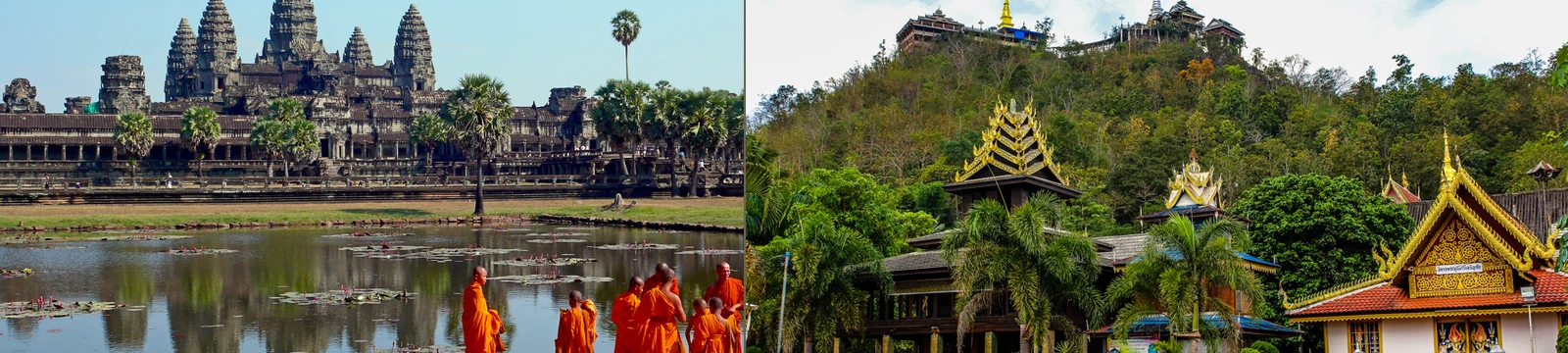
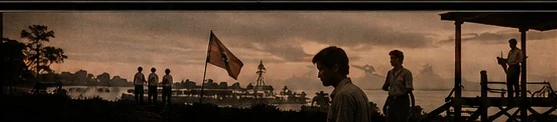
Archive-style Cambodian landscape image
Split production image showing Cambodia on the left and Thailand on the right

PRODUCTION, LOCATIONS & CINEMATOGRAPHY

  • Principal filming ran from 1983 into 1984.
  • Production locations included Phuket, Hua Hin and Bangkok in Thailand, alongside work linked to Cambodia and additional production support elsewhere.
  • Cinematographer Chris Menges won the Academy Award for his work on the film.
  • The camera style frequently places observers inside crowds, streets and unstable public spaces rather than treating the war as distant spectacle.

THE STORY

In civil-war Cambodia, New York Times correspondent Sydney Schanberg works with Dith Pran, whose knowledge, language and judgement make the reporting possible. As the Khmer Rouge advance, the foreign journalists still possess one crucial privilege: an exit.

Pran does not. The film divides into two connected experiences — Schanberg trying to account for what happened from safety, and Pran navigating forced labour, terror and displacement inside Cambodia. Their friendship gives the historical events a human scale without turning the Cambodian catastrophe into mere background.

Read more about the real people: Dith Pran ↗, Sydney Schanberg ↗.

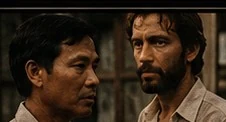
Archive-style illustration of the film's central partnership
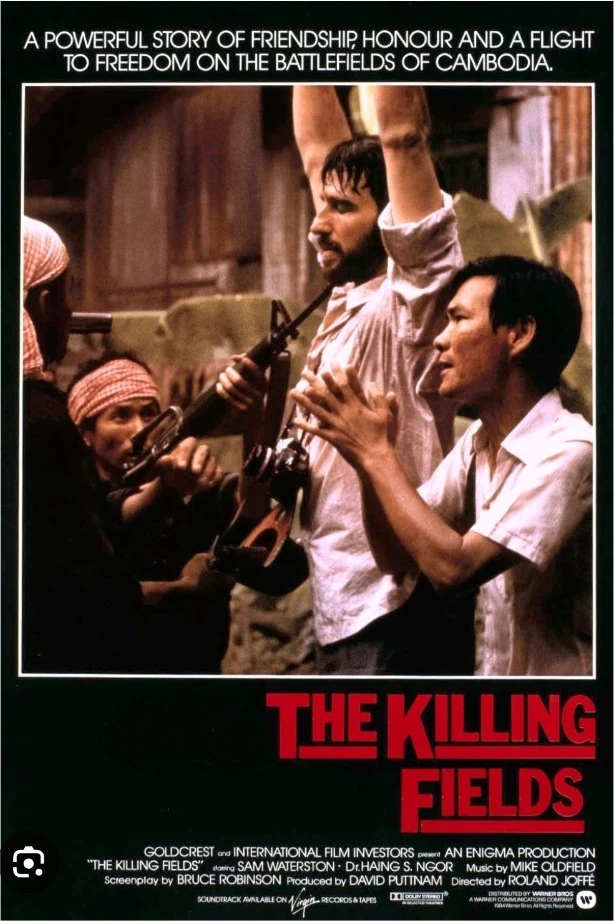
The Killing Fields theatrical poster shown as an archival reference

THE POSTER LANGUAGE

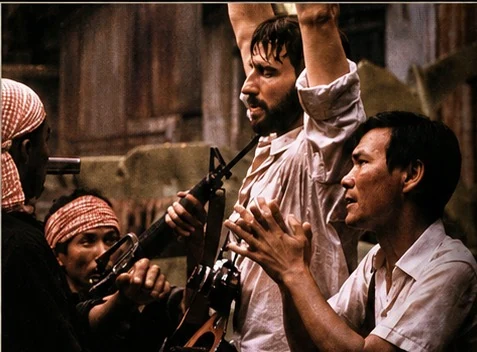
The original theatrical poster for The Killing Fields is striking for its restraint. Against an almost black background, a single documentary-style image carries most of the emotional weight, while the title appears in uncompromising red block lettering.

That visual language belongs very much to its moment. The campaign avoids glamour and spectacle, leaning instead toward reportage, urgency and political seriousness. In that sense the poster is not only promotional material, but also a small time capsule of how the film was presented to audiences in the mid-1980s.

IMDb media gallery ↗

EXTERNAL REFERENCE LINKS